How Is AI Automation Reshaping Sales Execution, and How Do You Own the System?
Routine sales execution tasks automate first because AI software handles predictable steps like list building and outbound messaging. When you execute manual steps inside an employer's stack, the output stays inside their tool. Building portable proof requires shifting from task execution to designing and owning the automated workflow.
By Vivek Sai, Founder ·

Where Sales Execution Automates First
We scored 342 jobs on how much AI already touches the work. Sales jobs score between 54 and 96, which puts sales roles squarely in the shift toward automated execution.
In traditional sales workflows, reps spend much of their week running manual execution sequences: list building, outbound messaging, and response handling. When software handles these routine tasks automatically, manual activity drops.
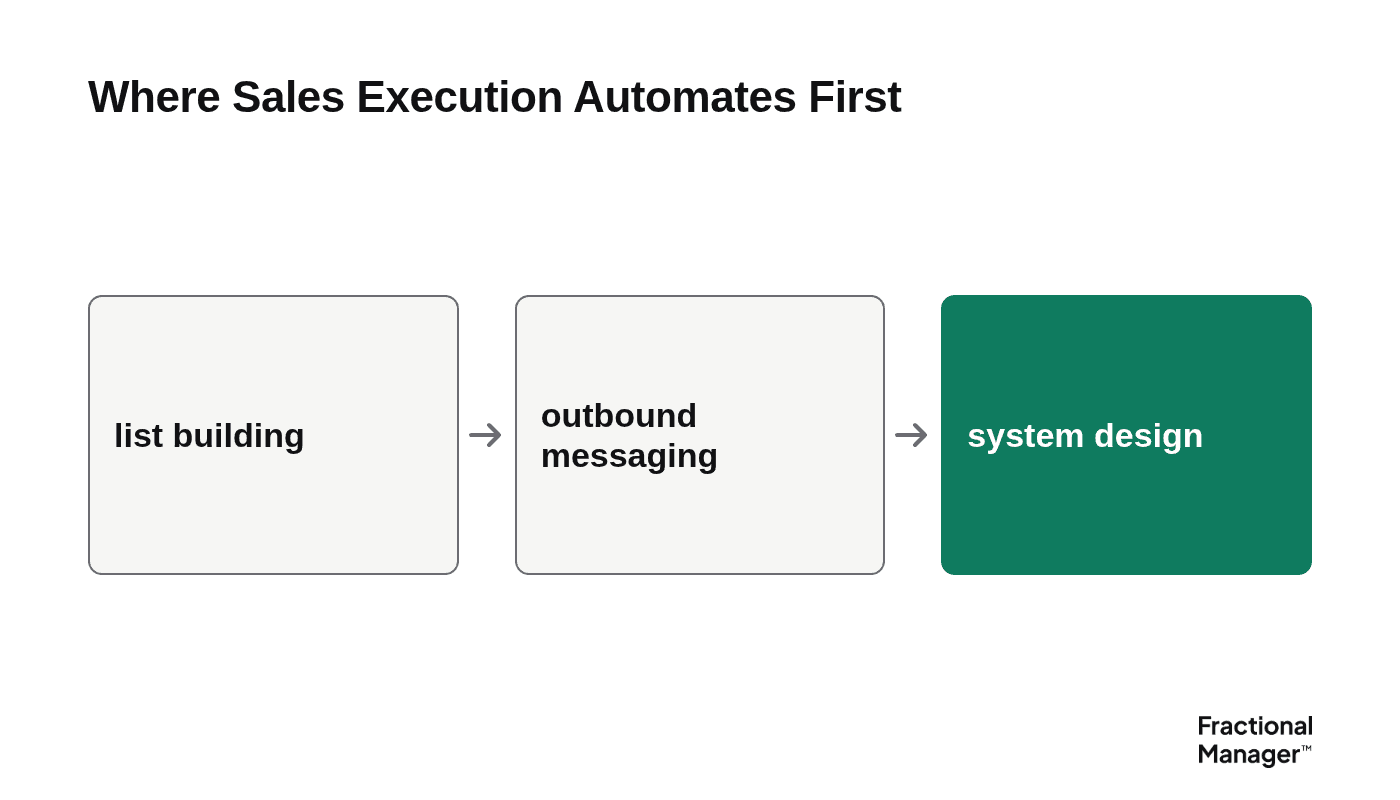
List building once required manual searches across databases and spreadsheets. Today, automated tools verify contacts and enrich records without manual data entry. Outbound messaging required writing individual emails or copying text into sequence tools; AI models now generate personalized outreach at scale. Because these steps follow structured rules, list building and outbound messaging automate first.
Why Task Execution Leaves No Portable Proof
When you spend your week executing manual tasks inside a company's software tools, the value accrues to the employer's system. Running outreach sequences or updating records produces output for your employer, but it leaves behind no evidence that belongs to you.
If your organization updates its technology stack or deploys automated software to handle outreach, internal activity logs stay behind company doors. Showing that you sent thousands of outbound messages proves past activity in one environment, but it does not demonstrate that you can build or govern revenue workflows.
System design creates proof you can take anywhere. System design means defining how data flows between tools, setting standards for what automated messages must do, deciding when a person takes over, and checking quality across the revenue process. Documenting how a workflow is structured proves that you decided how the work runs, not only that you ran the steps someone else designed.
Moving From Manual Workflows to System Design
Moving from manual execution to system design changes your daily work. Instead of running every step yourself, you design, test and monitor the workflow that runs them.
The clearest way to show that shift is a one-page workflow runbook. Here is what one could look like for an outbound sequence:
- Where data comes in: new target accounts arrive from the CRM each Monday, filtered to one industry and company size.
- What each message must do: the first email names one specific trigger, such as a new hire or a product launch, and asks one question.
- Where a person checks: a rep reads the first 20 messages of every new sequence before it sends at volume.
- When a person takes over: any reply that mentions pricing, contracts or a complaint goes to a rep within one business day.
- What gets recorded: a short weekly note of what changed in the rules, why, and what happened to reply quality afterwards.
The page itself is the proof. It shows that you decided how the work runs, where judgement stays human and how quality is checked, and you can carry that thinking to any team and any set of tools.
How to Check How Much AI Touches Your Role
Knowing how automation affects your own sales function is the place to start. The career trends directory at https://fractionalmanager.org/career-trends has breakdown pages across occupation clusters, so you can look up your role's score and the tasks behind it.
Once you have found your role, compare how your week splits between running steps by hand and designing how the work runs. If most of it goes to running steps, start with a runbook like the one above for the workflow you know best.
By moving from manual execution to system design, you build proof of ownership you can carry into your next role.
Questions people ask alongside this one
- How do I know how much AI touches my sales role?
- You can check your occupation's public score in the career trends directory on fractionalmanager.org.
- What is the difference between task execution and system design?
- Task execution is running manual outreach steps, while system design is building and managing the automated workflow.
Sources
Every figure on this page traces to one of these. Each line says what it backs.
- fractionalmanager.org — Sales and revenue occupations measure between 54 and 96 on AI exposure.
The row is the occupation. The audit is you: what you have demonstrably owned, scored from your own history, and what that makes you ready for in your domain.
Build my Skills Constellation™